NIMBA.

02 / D’MBA

The story of D’mba.

Before the emblem, there was a dance. The Baga communities of coastal Guinea gave D’mba a body, a place in the agricultural year, and a role in the lives of the people who gathered around her.

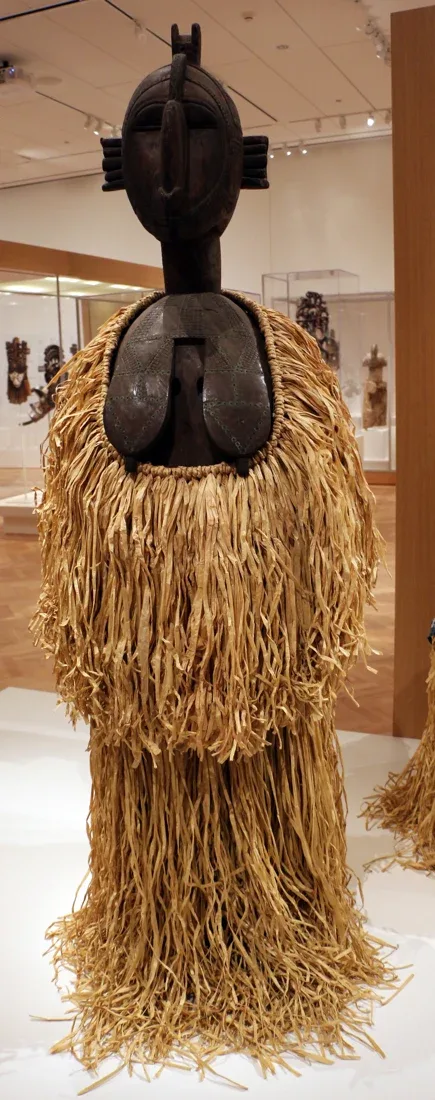
D’mba with its raffia costume

01 / D’MBA

From the highlands to the coast

Baga oral histories trace ancestral roots to Futa Jallon, the highlands in Guinea’s interior. Accounts of the journey vary by community. Many elders locate the making of D’mba on the coast, after their ancestors had settled there.

Rice cultivation shaped life on the Atlantic coast. The agricultural calendar, with its seasons of planting and harvest, gave the masquerade a rhythm. The headdress also appeared at weddings, funerals, and gatherings held to honor visitors.

Bowal Dampo, Futa Jallon highlands

02 / D’MBA

The woman in the wood

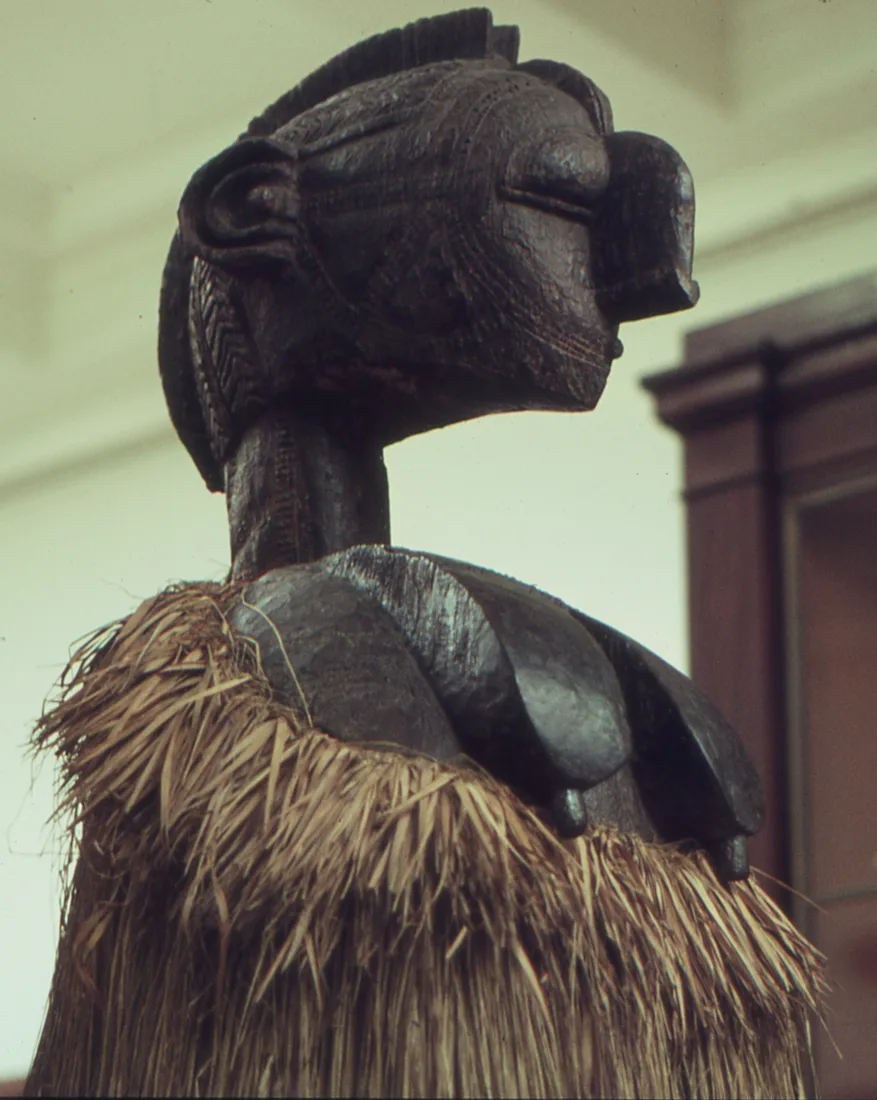
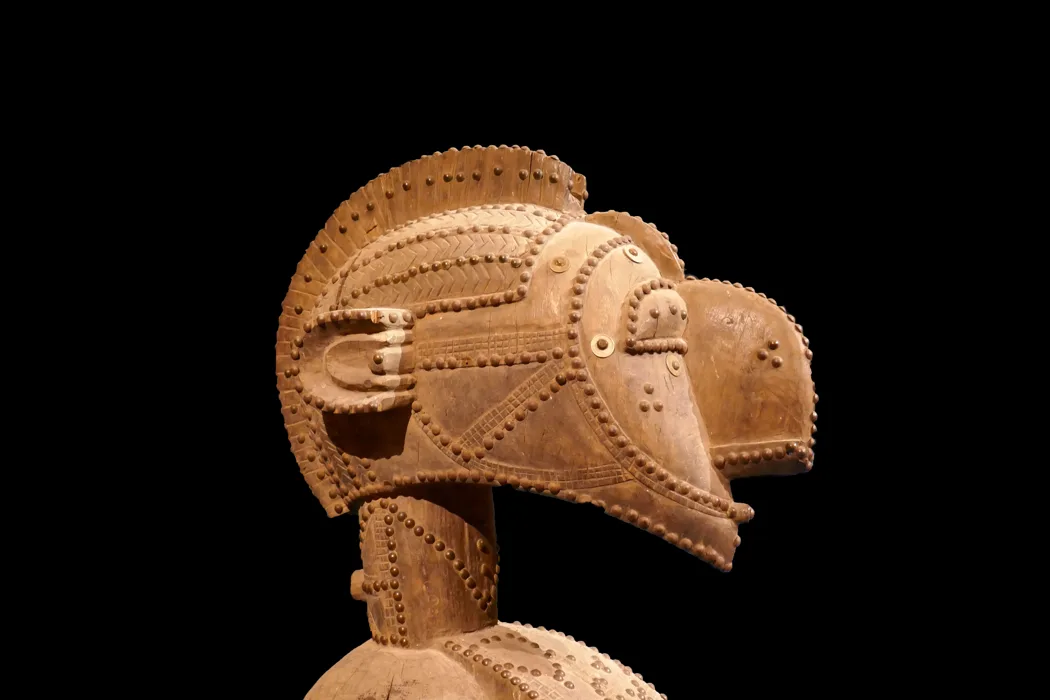
A Baga carver could shape a monumental D’mba from a single piece of wood. Look closely at the curve of the nose, the braided crest, and the incised lines around the face and along the chest. The coiffure recalls Fulbe hairstyles and Baga memories of Futa Jallon.

The long breasts honor a mature woman who has nursed and raised many children. D’mba embodies a model of care and strength. Fertility belongs to that meaning, both in the life of the family and in the hoped-for abundance of the fields.

“Care is a strength a community can recognize.”
Baga D’mba shoulder mask in profile

03 / D’MBA

When D’mba danced

Four carved supports steadied the headdress on a dancer’s shoulders. Cloth and a raffia skirt hid the performer, who looked out through openings between the breasts. In documented performances, drummers led the way into the village gathering place.

People took part in the performance. Women led songs and men joined the chorus. In some accounts, people reached toward the headdress or tossed rice as an expression of hope for fertility and a generous harvest. Practices varied from one community to another.

A Nimba shoulder mask displayed with raffia

04 / D’MBA

A tradition carried forward

Written records document D’mba by the late nineteenth century. Political and religious pressure interrupted public performances in the mid-twentieth century. Museum accounts describe renewed performances in the late twentieth century, as communities brought the form back into public life.

In 1985, Guinea gave a wooden Nimba to the United Nations. The figure also appeared on older 5,000-franc notes. In 2023, Guinea adopted the profile as its country brand. Each public use widened its audience, while the name D’mba still points back to the Baga artists and communities who made the figure meaningful.

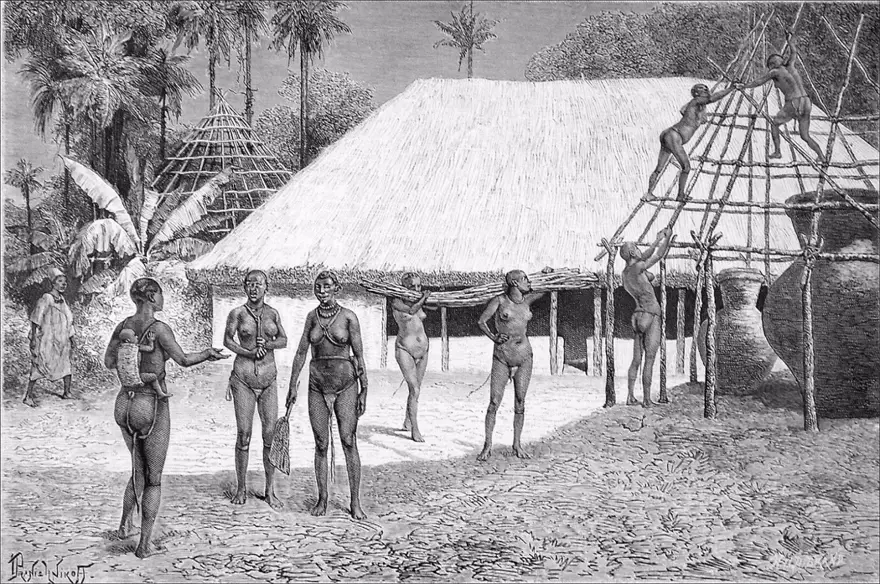
1880s engraving of women building a house on the Guinea-Conakry coast
“The figure traveled. Its roots are still on the coast.”
Shop the collection